When haze hits Singapore, you might close your windows or dry laundry inside. Whether you live in an HDB flat or a condo, start by blocking out smoke and choosing equipment for the rooms you use most. Air purifiers, dehumidifiers, and fans all have their own roles.
Check conditions before changing your routine.
Check the latest air quality updates from the National Environment Agency (NEA) using the myENV app, and follow the Ministry of Health’s haze advice. Always check the update time before planning outdoor activities or opening windows. If you have a heart or lung condition, follow your doctor’s advice.
Keep the room comfortable while limiting smoke.
When it’s smoky outside, keep doors and windows closed to keep smoke out, but make sure the room stays cool enough. Use air conditioning if needed. If it gets too hot, move to a cooler indoor area with cleaner air. Open up again for fresh air when the outdoor air improves.
Try not to add more smoke indoors by avoiding cigarettes, incense, candles, or smoky cooking. Use a damp cloth or mop to clean up dust without spreading it around. Begin with the room you use most, like your bedroom or living room.
Choose filtration that suits the room.
An air purifier pulls air through a filter to catch particles. Check its Clean Air Delivery Rate (CADR) and make sure it matches your room size. For open living and dining spaces, think about the whole area, not just where you put the purifier. A HEPA filter is good, but the purifier’s total cleaning power matters just as much.
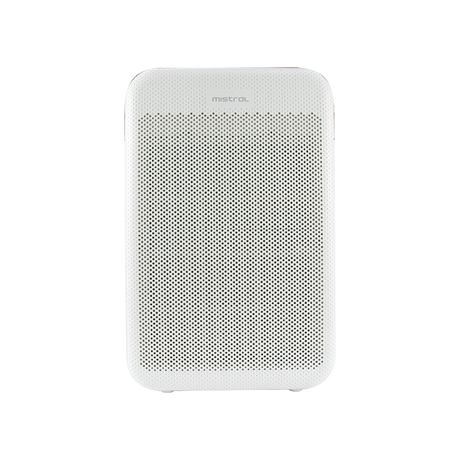
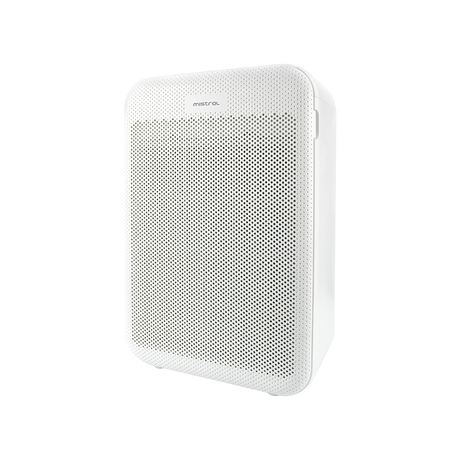
For example, the Mistral MAPF32 air purifier lists a HEPA H13 filter, a CADR of 360 m³/h, and a coverage area of 36 m². Use these published specifications as a starting point when comparing it with your room and filter-replacement needs.
Make sure the purifier’s intake and outlet are not blocked, and follow the filter care instructions. Think about the speed you’ll use most, since lower settings usually clean less air. No portable purifier can remove every pollutant, so use it alongside reducing indoor pollution and ventilating when outdoor air is better.
Manage dampness as a separate issue.
If you dry laundry indoors and the room feels damp, check the humidity level separately from the haze outside. A dehumidifier removes moisture from the air. It can help with dampness, but it won’t fix a leaking pipe or remove mould on its own.
The ÉlanPure by Mistral MDH1603DW combines dehumidification with a HEPA13 filter and a humidity indicator. Its listed moisture-extraction capacity is 16 litres per day at 30°C and 80% relative humidity. Extraction in your home will depend on the conditions.
The litres-per-day rating shows how much moisture a dehumidifier removes, not how well it filters particles. If you’re worried about haze particles, look for a CADR or proof of the model’s particle-cleaning ability. Check that any combined appliance does everything you need.
Use air movement for comfort.
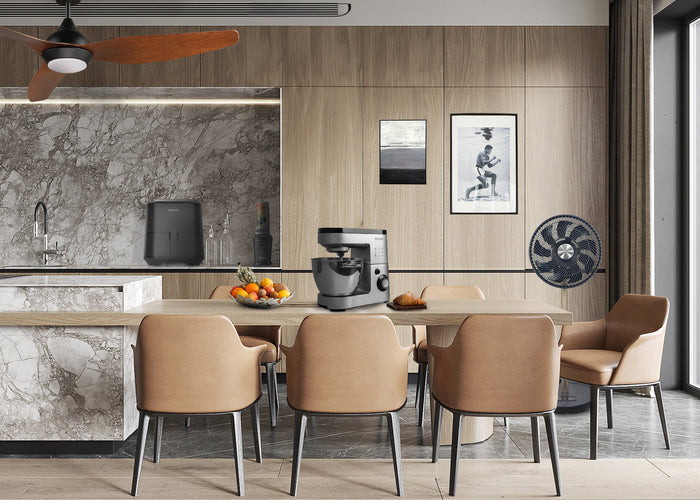
A fan or air circulator moves air around and can make you feel more comfortable. The Mistral FormaEase air circulator range is made for this. Just remember, moving air doesn’t filter haze or remove moisture, so use fans for airflow, not as a replacement for a purifier or dehumidifier.
Common questions
Does air conditioning replace an air purifier?
Air conditioning mainly controls temperature. Most air-conditioner filters don’t filter out fine particles as well as a good air purifier. Check your system’s filter specs to be sure.
Do I need all three appliances?
Begin by thinking about the problem you want to fix. You might already have the right equipment. Check its condition and read the instructions before buying something new. If you want to compare features, take a look at the Mistral air treatment range and check each model’s specs.